

Indoor humidity Florida homeowners deal with can make a home feel sticky and uncomfortable even when the thermostat says the temperature is fine. If you live in Central Florida, humidity is not just something you deal with outside. It can become a problem inside your home too.
A lot of homeowners call because the house feels sticky, the AC seems to run all day, or certain rooms just never feel comfortable. In many cases, the issue is not only temperature. It is humidity.
So, what should indoor humidity be in Florida?
For most homes, the ideal range is about 45% to 55%. That is usually the sweet spot where the home feels comfortable without getting too damp or too dry. In a Florida home, that range matters because your air conditioner is doing more than cooling the air. It is also helping remove moisture.
When humidity gets too high indoors, the house can feel clammy even if the thermostat says the temperature is fine. That is one of the biggest reasons people lower the thermostat more and more but still do not feel comfortable. The air may be cooler, but it still feels heavy.
High indoor humidity in a Florida home can also lead to musty smells, condensation on windows or vents, and extra wear on your AC system. In some homes, it can make allergy symptoms feel worse too. Moisture has a way of making a house feel off, even when you cannot immediately tell why.
What causes high indoor humidity in a Florida home?
A lot of homeowners ask about the right Florida AC humidity setting, but the truth is the thermostat setting is only part of the picture. A properly working AC system should remove humidity as it cools. If it is not doing that well, the problem may be airflow, maintenance, drain line issues, duct leaks, or even equipment sizing. Regular HVAC maintenance can help catch those issues before they turn into bigger comfort problems.
One common problem in Florida is short cycling. That means the system turns on and off too quickly. When that happens, the AC may cool the space fast but not run long enough to remove enough moisture. The house reaches the target temperature, but it still feels damp. That is frustrating, and it is a pretty common indoor humidity issue in Florida homes.
Dirty air filters can also make humidity problems worse. Restricted airflow affects how well the system operates, and that can reduce moisture removal. A clogged condensate drain line can cause trouble too, especially in a climate like ours where the system works hard most of the year. In some cases, ongoing humidity issues can point to a problem that needs professional AC repair.
In the Orlando area, we also see humidity problems in homes with leaky ductwork, poor attic insulation, or air leaks around doors and windows. Hot, humid outdoor air does not need much of an opening to start affecting comfort indoors. That is one reason Orlando humidity HVAC concerns are not always just about the equipment itself. Sometimes the house and the system are working against each other.
Signs your indoor humidity may be too high
If you are wondering whether your home’s humidity is too high, here are a few signs homeowners usually notice first:
- the house feels sticky or muggy
- some rooms feel cool but not comfortable
- the AC runs a long time without really improving comfort
- you notice musty smells
- there is moisture on windows, vents, or around certain areas of the home
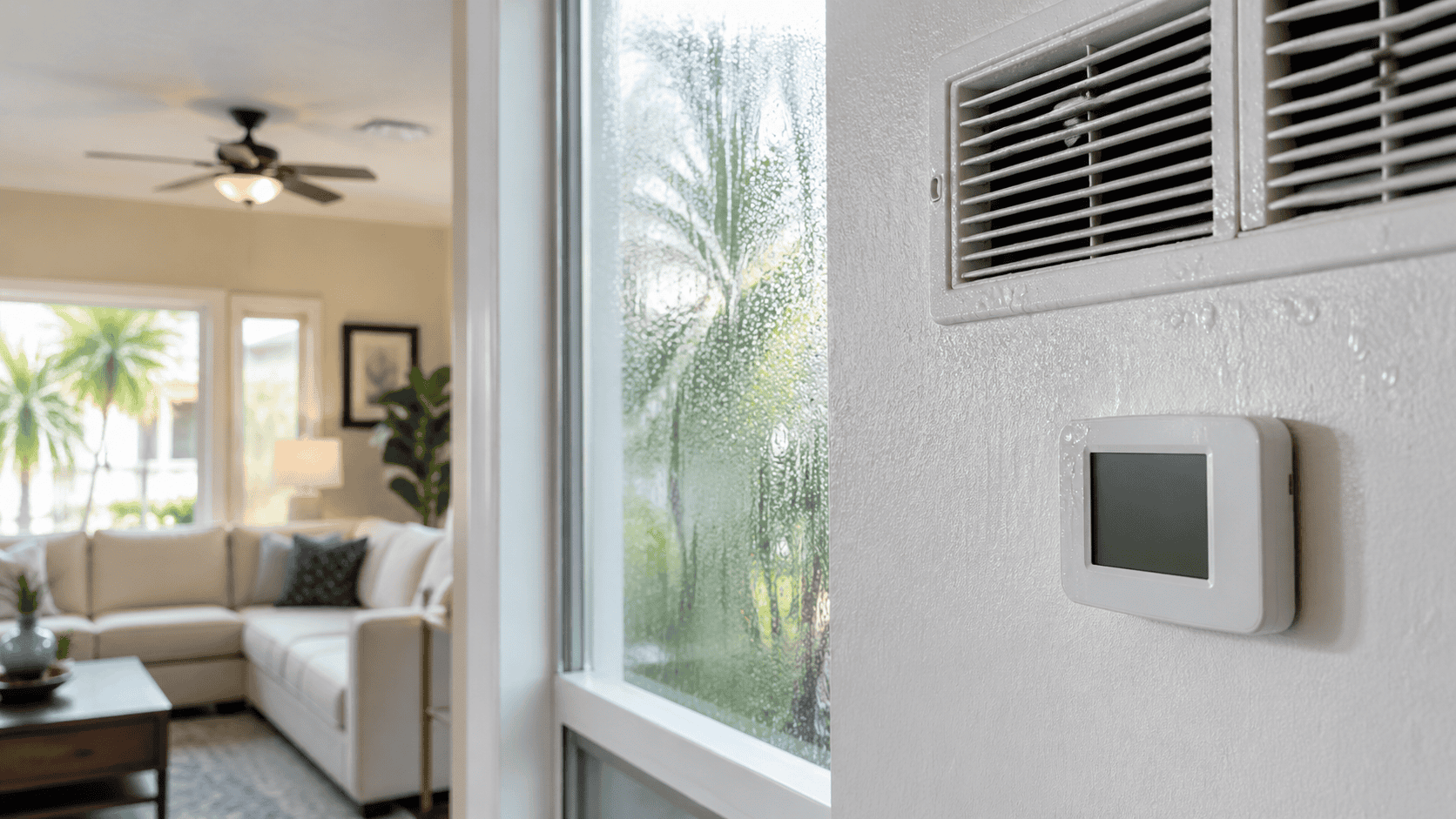
If that sounds familiar, it is worth paying attention to. Humidity problems usually do not fix themselves.
How to improve indoor humidity in Florida
The good news is there are a few basic things homeowners can do to help. Change your air filter regularly. Keep up with AC maintenance. Make sure your drain line is clear. If you have obvious air leaks around the home, sealing those can help too. And if the system has not been checked in a while, a professional inspection can usually tell you pretty quickly whether the issue is maintenance, airflow, system performance, or something bigger.
In Florida, indoor comfort is not just about getting the house cold. It is about getting the moisture level under control too. When indoor humidity stays in that 45% to 55% range, most homes feel better, the AC does its job more effectively, and you are less likely to deal with that damp, uncomfortable feeling that so many homeowners put up with for too long.
If your home feels humid even when the AC is running, there is usually a reason. And in Central Florida, it is worth getting ahead of it before it turns into a bigger comfort or system problem.
If your home feels cool but still humid, contact Air and Heat Solutions and we can help you figure out what is causing the problem.